
September 24, 2026
Ask someone who just bought their first house in the Heights what they liked about Houston's approach to development, and you will often hear some version of "no zoning, more freedom." It is the city's most repeated real estate fact, and it is true as far as it goes. Houston is the largest city in the country without a traditional zoning code. What most new owners do not realize until they pull a permit or plan an addition is that the absence of zoning did not leave a vacuum. It left three separate systems, layered on top of each other, that can be stricter and more specific to a single lot than a zoning ordinance would ever be.
For a buyer weighing a fixer upper against a move in ready home, or a seller preparing to list a property that has already been renovated once, this distinction matters more than it sounds. The question is not whether the Heights has rules. It does. The question is which rules apply to your particular lot, who enforces them, and how much room you actually have before you draw plans.
The first layer is private. Deed restrictions in Houston are covenants recorded against specific subdivisions, sections, or even individual lots, and the city's own legal department is explicit that there is no single set of restrictions covering the whole city. In parts of the Heights, restrictions apply lot by lot rather than block by block, which means a buyer cannot assume the house next door tells them anything about what they can build on their own parcel.
The second layer is public and citywide: Chapter 42 of the city code, which governs subdivision, setbacks, and lot size in the absence of zoning. Certain Heights blocks carry a Special Minimum Lot Size or Minimum Building Line designation on top of the base code, which locks in a minimum lot size or front setback for that specific area.
The third layer only applies inside a historic district: a Certificate of Appropriateness, reviewed by the Houston Archaeological and Historical Commission, required before most exterior work.
| Layer | Who enforces it | Where to verify it |
|---|---|---|
| Deed restrictions | Private owners, or the city's legal department when petitioned | Harris County Clerk's Office, or the Houston Heights Association's deed restriction records |
| Minimum Lot Size / Minimum Building Line | City of Houston Planning and Development | City's MLS/MBL lookup tool |
| Historic District review (COA) | Houston Archaeological and Historical Commission | City's Historic Preservation office |
None of these three systems defers automatically to the others. Chapter 42 states that where a recorded deed restriction is more restrictive than the city's minimum building line, the deed restriction controls. A historic district's design guidelines can require deeper setbacks or a different scale than the base code allows. A homeowner can clear one layer and still be stopped by another.
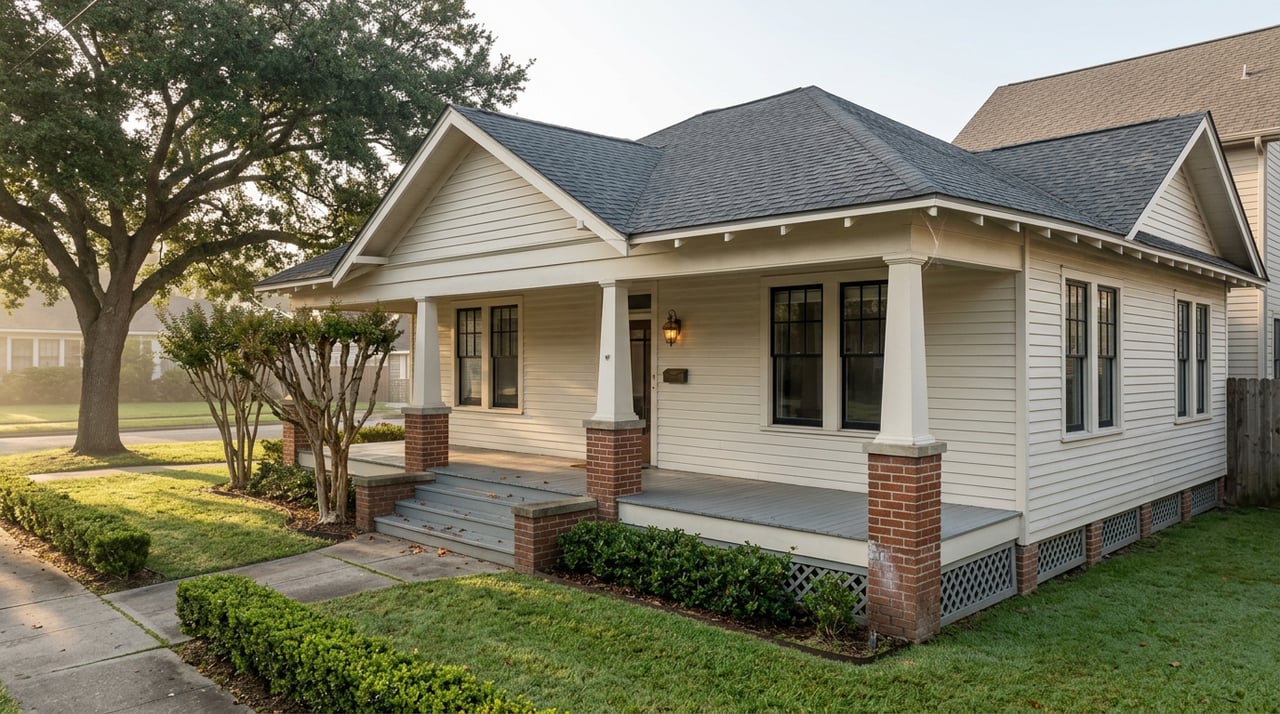
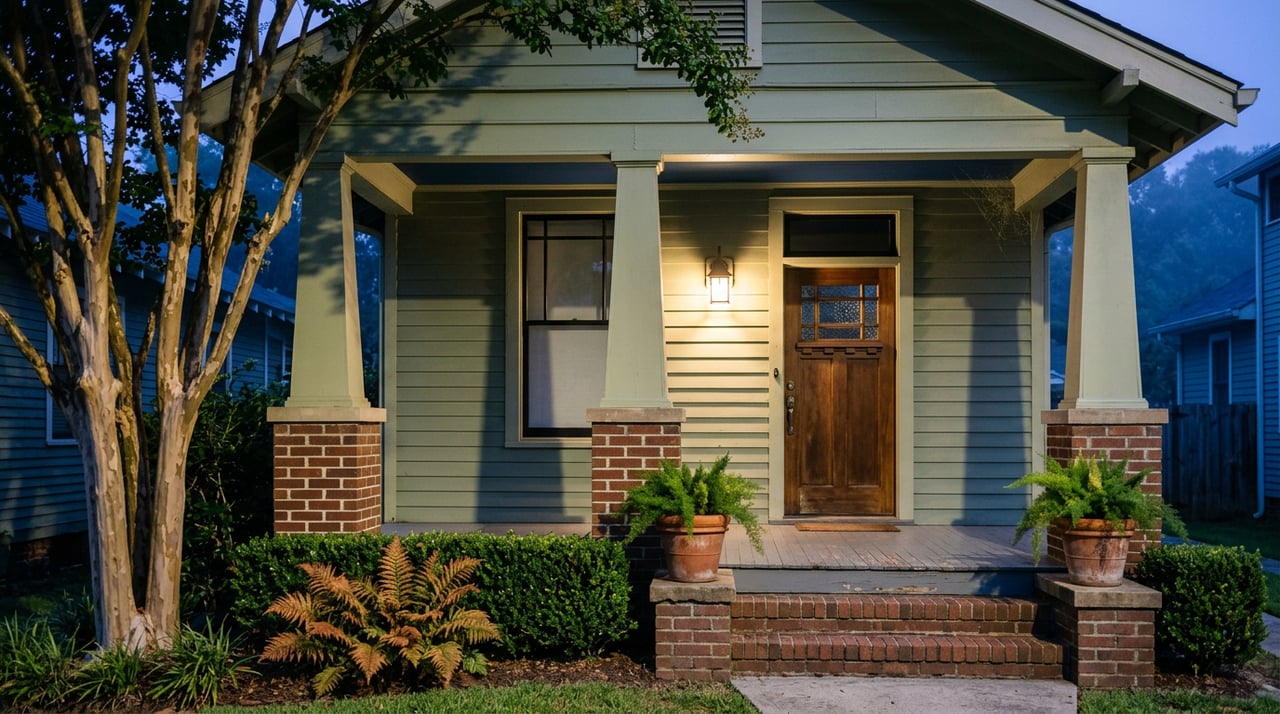
This is where the "no zoning" assumption breaks down in practice. Zoning, where it exists, typically applies uniformly across a defined district. Heights deed restrictions do the opposite. The city's legal department points to Oak Forest as an example where restrictions are valid only within specific platted sections, and notes that in Heights area neighborhoods restrictions can be applicable lot by lot. Two nearly identical bungalows across the street from each other can be sitting on completely different sets of recorded terms, one permitting a detached garage close to the property line, the other requiring a five foot setback from every interior lot line, a coverage limit, and a cap on how tall an accessory structure can be relative to the main house.
The practical effect is that a buyer cannot rely on a neighbor's addition, a comparable renovation down the street, or a general sense of "what the Heights allows" as a stand in for their own property's actual restrictions. The Houston Heights Association maintains copies of recorded restrictions for review, and pulling them before writing an offer, not after closing, is the only way to know what a specific lot permits.
Layered on top of deed restrictions and the city's lot size rules, seven mapped historic districts sit inside the broader Heights footprint: Houston Heights East, West, and South, along with Woodland Heights, Norhill, Freeland, and Germantown. Every one of them requires a Certificate of Appropriateness before most exterior alterations, additions, new construction, or demolition. Only three of those seven districts, Heights East, West, and South, have written design guidelines that spell out expectations for setbacks, massing, and materials. The other four are reviewed without a published rulebook, which means the outcome depends more on the commission's judgment in that particular case.
Demolition is where this system shows its teeth most clearly. A property owner inside a historic district who wants to tear down a structure has to apply for a COA and demonstrate unreasonable economic hardship or another compelling circumstance before the commission will approve it. That standard exists specifically to make demolition the exception rather than the default, and the commission's chair described the goal in blunt terms when the ordinance's legality was being tested in court, saying the commission exists to help preserve and conserve the quality, character and fabric of Houston's tangible history.
There is a real incentive built into following the process correctly. A project that receives an approved COA becomes eligible for a 50 percent discount on building permit fees and, in some cases, a city tax exemption. A project denied a COA is not eligible for either.
For anyone wondering whether this system might loosen up over time, that question was tested directly and closed. Two Heights homeowners challenged the city's Historic Preservation Ordinance, first passed in 1995 and given stronger enforcement mechanisms in 2010, arguing that it functioned as zoning and therefore violated the city charter. The Texas Supreme Court ruled against them in June 2021, upholding the ordinance for both the city and the state as a whole. That ruling protects roughly 7,500 structures across Houston, including about 2,000 across the Heights East, South, and West historic districts alone.
As of January 2026, the city counts 23 historic districts citywide holding 305 designated landmarks, 213 of them protected. The Heights makes up a meaningful share of that total, and the legal foundation underneath it is not in question. A buyer weighing whether historic district status is a temporary quirk of city politics should treat it instead as durable law, upheld at the state's highest level.
None of this should discourage a buyer from a Heights renovation project or a seller from listing a home that already carries one of these designations. It does mean the due diligence has to happen earlier than most buyers expect, and it has to happen at the address level rather than the neighborhood level.
Before writing an offer on a Heights property you plan to change:
A seller preparing to list benefits from the same homework. Buyers increasingly ask what they can and cannot change before they make an offer, and a seller who can answer that question with documentation, not just an impression, tends to move through option periods with fewer surprises.
Does every property in the Heights have deed restrictions? Not universally, and not identically. Restrictions are recorded by subdivision, section, and in some Heights area neighborhoods by individual lot, so the only reliable way to know is to check the specific address at the Harris County Clerk's Office.
If my block is inside a historic district without written guidelines, does that mean fewer restrictions? No. It means the review is more subjective rather than less strict. Heights East, West, and South are the only districts with published design standards. Woodland Heights, Norhill, Freeland, and Germantown are reviewed by the commission without that written reference point.
Can I skip the Certificate of Appropriateness process if I am only doing interior work? Ordinary maintenance and repair, along with most interior changes, generally do not require a COA. Anything that changes the exterior appearance, including additions, new construction, or demolition, does.
Houston's lack of zoning gets treated as a punch line about the city's freewheeling growth. In the Heights, it is closer to the opposite. The rules are just private, address specific, and in some cases still being written case by case. Knowing which layer applies to your lot before you fall in love with a floor plan is the difference between a smooth renovation and a stalled one.
If you are weighing a purchase, a renovation, or a listing in the Heights and want a clear read on what a specific address allows, the team at McCrory Clark Realty Team can help you pull the right records before you commit to a plan. Get a free home valuation and a straight answer on what your property can actually become.
Bringing together a team with the passion, dedication, and resources to help our clients reach their buying and selling goals. With you every step of the way. Contact us today to find out how we can be of assistance to you!
27880 Birnham Woods Dr Ste C Spring, TX 77386