
October 1, 2026
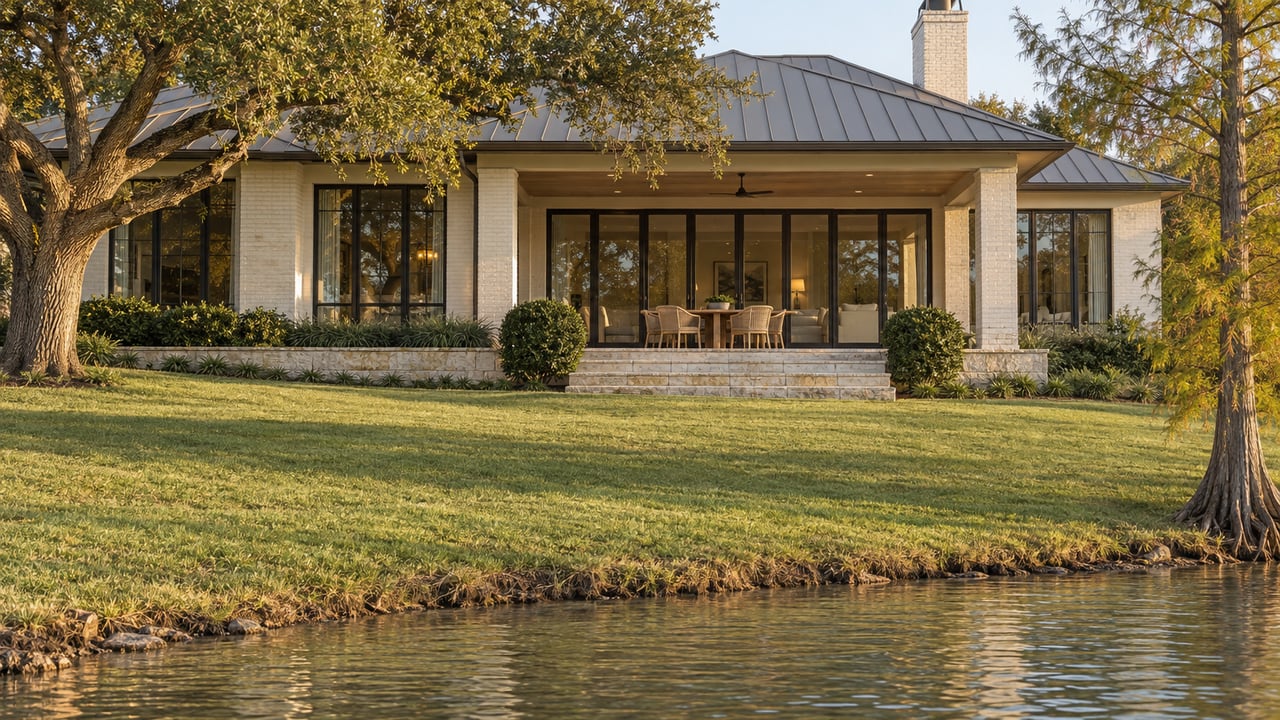
A Lake Conroe waterfront deal rarely falls apart over the house. It falls apart over a folder.
Picture the pattern local agents see more than once a season: eight days into the option period, the buyer's inspector walks the dock and flags the boat lift wiring. The buyer's agent asks for the permit. The seller goes looking and finds the dock license was issued to the couple who owned the house back in 2014. The bulkhead was rebuilt after a storm a few years later, and nobody kept the stamped engineering drawings. Now there are four days left on the option period and somebody has to decide who pays to sort it out, and how much that's worth.
None of that is about the square footage, the kitchen, or the view. It's about a second asset most waterfront owners on Lake Conroe don't realize they hold separately from the house: the paperwork that lets a shoreline lot function as a waterfront property at all.
The San Jacinto River Authority owns and operates Lake Conroe as a water-supply reservoir, and its licensing office is direct about what that means for anyone with a dock, lift, or bulkhead on the water. On its own permitting pages, SJRA states plainly that the right to build, keep, or maintain a private bulkhead is not an inherent right that comes with owning waterfront property, and that any permit it issues can be revoked. The same logic covers docks, boat slips, and lifts under SJRA's broader licensing and permitting authority, which extends to residential shoreline structures across the reservoir.
That distinction matters more at resale than at any other point in ownership. A buyer isn't just purchasing a lot with water frontage. They're purchasing a bundle of licenses that the seller holds, that may or may not transfer with notice, and that a new owner might have to reapply for under whatever standards SJRA is enforcing that year. A reapplication under current rules can be stricter than the terms under which the original structure went in.
Lake Conroe's shoreline isn't one homeowners association with one rulebook. Walden is organized into multiple sections plus condo associations, with governance documents that separately reference vacant lots, single-family homes, townhomes, and condo units, so a shared dock or community slip there raises a different set of questions than a private one. April Sound adds its own architectural review on top of the SJRA license, meaning shoreline work that skipped that review can surface as a gap during resale even if the SJRA paperwork is clean. Bentwater describes itself as a 1,400-acre master-planned community stretched along 12.5 miles of Lake Conroe shoreline, and Cape Conroe's canal-front lots carry an added question about historical dredging, since canal depth at the bulkhead tells a buyer more about usable water than any listing photo does.
One distinction is worth stating plainly for anyone comparing options in the area: Grand Central Park, the roughly 2,000-acre Land Tejas community selling in the mid-$300s to $750,000 range, is built around its own community lake. That lake is not Lake Conroe, and none of the SJRA shoreline licensing described here applies to it.
Buyers comparing docks often assume Lake Conroe sits at a fixed level. It doesn't, and the mechanism behind that has changed recently in a way that affects how a dock or bulkhead should be evaluated before closing.
For years, SJRA operated under a Seasonal Lake Lowering Program that drew the lake down on a fixed calendar each spring and fall to create flood storage capacity ahead of major rain. That program ended. In April 2024, SJRA's general manager announced the Seasonal Lake Lowering Program was over, replaced by a new framework called Active Storm Management, according to updates published by the Lake Conroe Association. Under the current arrangement, the City of Houston, which owns two-thirds of the water rights in the reservoir, can request diversions between April 1 and June 1 to draw the lake toward roughly 200.5 feet above mean sea level ahead of forecast storms, rather than on a fixed seasonal schedule. A drought contingency plan separately triggers watering restrictions once the lake falls to 199 feet.
Normal pool on Lake Conroe is 201 feet above mean sea level. As of September 13, 2026, the reservoir sat at 94.8 percent of conservation capacity, a figure that moves with rainfall and with whatever diversion decisions the City of Houston and SJRA make that season. A dock engineered around a static 201-foot pool will behave differently the week the lake sits a foot or more below that. For a full-time boater deciding between a private dock and a slip at a marina like Pier 105 or Waterpoint, that swing is part of the comparison, not a footnote to it.
Not every Lake Conroe property runs on public sewer. For homes that use an on-site sewage facility, SJRA regulates those systems within 2,075 feet of the reservoir's shoreline, layering its own inspection and maintenance documentation requirements on top of what Montgomery County or TCEQ would otherwise require. A septic system near the water isn't just a county record. It's a second file with its own permit history, and a buyer's option period is the wrong time to discover the maintenance contract was never renewed.
The reason all of this belongs in a pricing conversation, not just a compliance checklist, comes down to what these structures cost to fix. A short run of bulkhead repair can land in the low tens of thousands of dollars, while longer runs or fully engineered solutions can reach $50,000 to $150,000 or more depending on material and shoreline exposure. A new private dock can run into the low tens of thousands for a modest build, more for a covered slip or custom design. Lift replacements typically fall somewhere between the mid-thousands and low tens of thousands depending on capacity.
A listing that can't produce a clean permit history and a documented structure condition isn't overpriced by opinion. It's overpriced by whatever it costs to close that gap, and that number is rarely small enough to negotiate away in a day.
For a seller, the fix is sequencing, not scrambling. A few steps handle most of what a buyer's agent will eventually ask for:
Doing this before listing turns a potential option-period standoff into a line item the price already accounts for.
Does an SJRA dock permit transfer automatically when a home sells? Not automatically in every case. Some structures transfer with simple notice to SJRA, while others require the new owner to reapply, which can mean review under whatever standards are current at the time of sale rather than the ones the original structure was approved under.
If we're planning to rent the home short term, does any of this dock paperwork matter for that too? It's a separate question worth checking alongside it. Texas imposes a 6 percent state hotel occupancy tax on short-term stays, and the City of Conroe may require its own local registration for short-term rentals. Neither of those addresses the shoreline permits, so both need to be checked on their own.
What if the bulkhead has been there for decades and nobody ever pulled a permit? Age doesn't create an exemption. SJRA's position is that bulkhead rights aren't inherent to ownership regardless of how long a structure has stood, and a permit can still be required or revoked. The practical move is to address it before listing, or price the home to reflect what resolving it will cost.
If you're getting ready to list a Lake Conroe waterfront home, or you're under contract on one and want a second set of eyes on what the dock, bulkhead, and septic paperwork actually says before your option period runs out, the McCrory Clark Realty Team can walk the file with you before it becomes a negotiation.
Bringing together a team with the passion, dedication, and resources to help our clients reach their buying and selling goals. With you every step of the way. Contact us today to find out how we can be of assistance to you!
27880 Birnham Woods Dr Ste C Spring, TX 77386